Voting is between November 1st and NOvember 7th, please vote for:
CAA promotes contract pricing for Part 91 general aviation, serving corporate flight departments, individual owner-operators and aircraft management companies.
Thank you for considering Galaxy FBO at the Houston William P. Hobby (KHOU) airport as the Preferred FBO for the Corporate Aircraft Association.
Hosted by the Houston Chapter of The Ninety-Nines International Organization of Women Pilots, the month-long Poker Run takes place September 1 through October 3, 2026, raising funds to support aviation scholarships and chapter activities that help educate, encourage, and empower women in aviation.
How the Houston 99s Poker Run Works
Unlike a traditional poker tournament, this one involves a little more (flight) planning. Participants can travel to designated airports throughout Central and Eastern Texas and Western Louisiana ( (CXO, GLS, LBX, DWH, TYR, CLL, LFK, ASL, CWF, 50R, HYI, BAZ, IWS). At each participating airport, entrants collect a sealed playing card with the goal of building the best five-card poker hand from seven cards.
Participants can start at any participating airport, choose their own route, and visit as many of the designated stops as they would like. The Poker Run is open to everyone, not just members of The Ninety-Nines. Pilots, passengers, drivers, families and aviation enthusiasts of all ages are welcome to participate.
The Finish Line: West Houston
The month-long adventure concludes on Saturday, October 3, 2026, at West Houston Airport (IWS). Participants will gather beginning at 11:00 a.m. to open their cards, complete their hands and determine the winning entries. Prizes will be awarded beginning at noon. Whether you complete all seven stops or simply visit a few airports along the way, the Poker Run offers a great excuse to explore new destinations, enjoy some flying and connect with fellow members of the aviation community.
Supporting Women in Aviation
The Houston 99s are part of The Ninety-Nines International Organization of Women Pilots, an organization whose history dates back to 1929. Today, The Ninety-Nines continue to advance aviation through education, scholarships, mentorship and mutual support for women pilots. Proceeds from the Houston 99s Poker Run will help support future scholarships and chapter activities, making every stop along the route part of a larger mission.
At Galaxy FBO, we are proud to support organizations and events that bring the aviation community together, encourage the next generation of aviators and create new opportunities for people to experience and pursue aviation.
Ready to Play?
The Houston 99s Poker Run runs September 1 through October 3, 2026, giving participants plenty of time to chart a course and collect their cards.
Register for the Houston 99s Poker Run at zeffy.com/houston-99s-poker-run-15
View participating airports, complete rules and event information: scs99s.org
Questions about the event can also be directed to houston99s@scs99s.org.
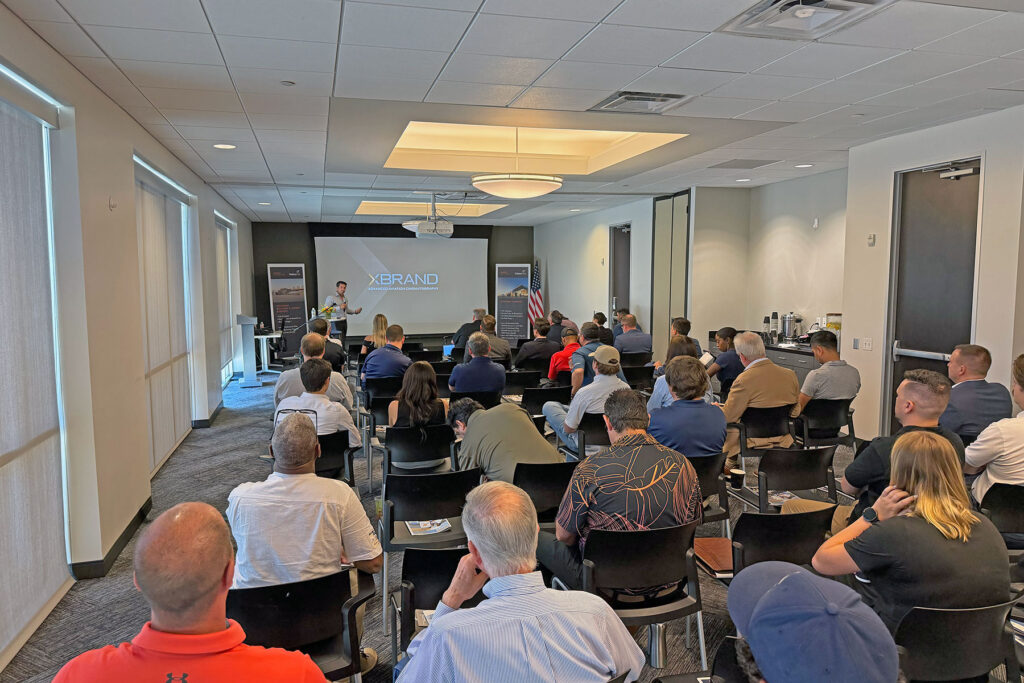
Galaxy FBO recently welcomed Kevin LaRosa to our Conroe-North Houston Regional Airport (CXO) location as a featured speaker at the South Texas Business Aviation Association (STXBAA) Houston Area Safety Day. His presentation, “Soaring to Success: Building Trust, Safety, and Collaboration in High-Stakes Filmmaking,” offered a fascinating perspective on how preparation, communication and teamwork make some of aviation’s most complex operations possible.
LaRosa is one of the motion picture industry’s leading aerial coordinators and stunt pilots. An Airline Transport Pilot with experience across airplanes, helicopters and jets, his credits span more than 100 motion picture and commercial productions, including Top Gun: Maverick, The Avengers, Iron Man and Transformers. His work on Top Gun: Maverick included coordinating highly complex aerial sequences, working with the U.S. Navy, helping prepare the cast for the aviation environment, and utilizing specialized aerial camera platforms to capture some of the film’s signature flying sequences. While Hollywood may provide the backdrop, the principles behind LaRosa’s work are familiar to anyone in professional aviation: plan thoroughly, communicate clearly, understand the risks, trust your team and never allow the mission to compromise safety.
Dan Scanlan, Galaxy FBO’s Director of Safety & Quality had to opportunity to ask Kevin his perspective on aviation safety and what pilots, flight departments and aviation professionals can learn from operating in an environment where there may be only one opportunity to get the shot right.
[Dan Scanlan] Your work can involve multiple aircraft, camera platforms, pilots and production teams operating simultaneously. Before anyone takes off, what does the safety planning process look like on the ground?
For us, the safety process begins long before an aircraft starts. We first define exactly what the creative team wants to accomplish and then translate that creative objective into a disciplined aviation operation.
We identify the aircraft, crews, airspace, terrain, weather, performance limitations and emergency considerations. From there, we establish clear roles, communication procedures, operating boundaries and abort criteria. Everyone must understand not only the plan, but also what every other aircraft and department is expected to do.
Before takeoff, we conduct a detailed briefing and remove as much ambiguity as possible. If the plan cannot be clearly explained and understood on the ground, it is not ready to be attempted in the air. The shot may be creative, but the operation cannot be improvised. We never allow the pressure to get the shot to override the discipline required to get everyone home safely.
[Dan Scanlan] You’ve described using a “crawl, walk, run” approach when developing challenging aerial sequences. How does that philosophy work in practice, and how could pilots and flight departments apply the same mindset to everyday aviation operations?
“Crawl, walk, run” means complexity is earned incrementally. We begin with the simplest version of the maneuver. We may talk through it, rehearse it on the ground, fly it at greater separation or perform it at a slower speed. Once the team demonstrates proficiency and communicates effectively, we introduce the next layer of complexity.
The same principle applies directly to business aviation. When introducing a new aircraft, airport, procedure or crewmember, avoid combining every new variable on the first flight. Build familiarity progressively and create opportunities to identify problems while the task is still simple and the margins are generous.
The objective is not merely to prove that something can be done; it is to develop a method that can be repeated safely and predictably. Repetition builds confidence, but disciplined progression builds capability.
[Dan Scanlan] In business aviation, we often talk about how complacency can develop around operations we perform routinely. In your world, how do you keep a team disciplined and safety-focused?
Complacency often appears when experience makes something feel easier than it actually is. Familiarity does not reduce the risk; it can simply reduce our awareness of it.
We continue to brief routine operations, use checklists and identify what is different about today’s mission. The aircraft may be familiar, but the weather, personnel, environment or operational pressure may have changed. I also try to preserve a healthy level of professional skepticism by asking: What has changed? What are we missing? Where are we most exposed today?
Experience should make us more disciplined, not more casual. The moment an operation feels too routine to brief is often the moment it most needs to be briefed.
[Dan Scanlan] Communication is critical when working together. What have you learned about creating an environment where anyone on the team feels empowered to speak up when something doesn’t look or feel right?
That begins with leadership. You cannot tell people to speak up and then punish them—directly or indirectly—when they do.
At the beginning of an operation, I make it clear that every person has the authority and responsibility to raise a concern or call a stop. Rank, title and experience do not matter when someone sees something the rest of us may have missed. When someone speaks up, the first response should be, “Thank you—let’s take a look.” Even if the concern ultimately proves insignificant, raising it was still the correct behavior.
A strong safety culture is not one in which the leader has all the answers. It is one in which the leader creates enough trust for the entire team to contribute. I would rather answer an uncomfortable question on the ground than face an unanswered problem in the air.
[Dan Scanlan] Technology in the cockpit and in aerial cinematography has changed dramatically throughout your career. How do you take advantage of new technology without allowing it to replace basic airmanship, situational awareness and sound judgment?
I see technology as a force multiplier, not a substitute for judgment. Modern avionics, stabilized camera systems, flight tracking and communication tools give us capabilities that would have been unimaginable earlier in my career. But technology is only valuable when the operator understands what it is doing, what it is not doing and how it can fail.
We train to use the technology while continuing to protect the fundamentals: aircraft control, situational awareness, communication, energy management and sound decision-making. Pilots must remain ahead of the aircraft rather than becoming passengers who simply monitor a collection of systems.
The best technology reduces workload and improves awareness; it should never reduce engagement. Technology can provide more information, but it cannot assume responsibility for the decision.
Safety Is a Team Effort
From a Hollywood film set to a corporate flight department, aviation safety ultimately depends on people. Technology, procedures and equipment continue to evolve, but preparation, communication, sound judgment and a willingness to speak up remain fundamental.
We thank Kevin “K2” LaRosa for visiting Galaxy FBO in North Houston, sharing his experiences with the South Texas aviation community, and offering a different perspective on what it takes to safely accomplish an extraordinary mission.
At Galaxy FBO, we’re proud to support organizations such as STXBAA that bring aviation professionals together to share knowledge, strengthen our industry and continue advancing a culture of safety.
The STXBAA Safety Day brought together members of the South Texas business aviation community and an impressive lineup of speakers representing business aviation, aerospace, emerging technology and aerial filmmaking. Throughout the afternoon, attendees explored aviation safety from distinctly different perspectives—with a common focus on preparation, communication, leadership and managing risk.
Aviation Safety from Four Unique Perspectives:
Mario Jimenez, WYVERN – “Briefing and Debriefing Tools – A New and Effective Approach”
Mario Jimenez, a Flight Leader Coach with WYVERN, shared his perspective on operational safety, risk management and the human factors that influence flight operations. His work focuses on helping aviation organizations develop practical tools and stronger safety cultures that extend beyond regulatory compliance. Mario has also contributed to WYVERN safety guidance on topics including circling and stabilized approaches, helping operators identify, manage and mitigate operational risk.
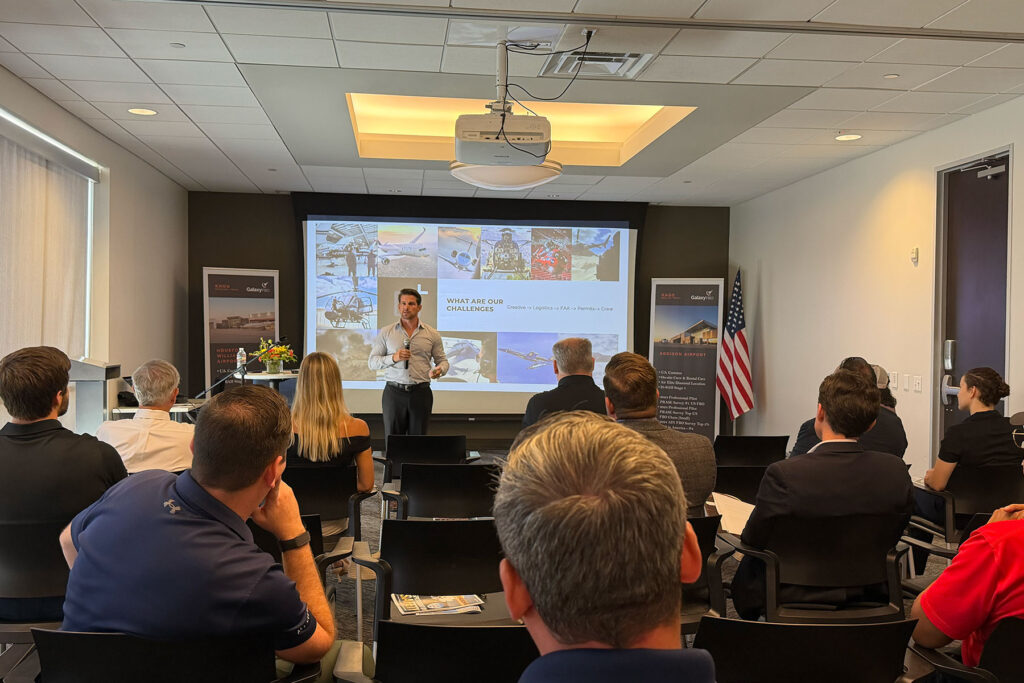
Kevin “K2” LaRosa, XBRAND – “Soaring to Success: Building Trust, Safety, and Collaboration in High-Stakes Filmmaking”
Acclaimed motion picture aerial coordinator, pilot and aerial cinematography specialist Kevin “K2” LaRosa brought a unique perspective on aviation safety from an environment where meticulous planning, teamwork and trust are essential. A second-generation film and television pilot, K2 has worked on productions including Top Gun: Maverick, Devotion, Iron Man, The Avengers and Transformers. His presentation explored how teams safely execute highly complex aerial operations while balancing creativity, precision, risk management and the demands of high-stakes filmmaking.
Wesley Bonura, NASA – “Inside NASA: Conducting Safe Human Vacuum Tests Where Failure Isn’t an Option”
Wesley Bonura took attendees inside one of aerospace’s most demanding safety environments: human-rated testing at NASA. A Texas A&M aerospace engineering graduate, Wesley has worked in NASA’s Crew and Thermal Systems Division as a Test Director and Lead Test Director. His team operates thermal and human-rated vacuum chambers used for astronaut training, human research and other testing. His presentation provided a fascinating look at the planning, procedures and safety discipline required when conducting hazardous human-in-the-loop testing where the margin for error can be exceptionally small.
Carmen Simboli, Amazon Prime Air – “Prime Air’s Drone Ecosystem: Airspace Analysis, Cutting-Edge Technology, and a Vision for What’s Next
Carmen Simboli, Airspace Integration Specialist at Amazon Prime Air, brought the conversation into the future of aviation with a look at safely integrating unmanned aircraft into the National Airspace System. Carmen oversees airspace integration and UAS Traffic Management strategy for Prime Air. His more than 15 years of aviation experience includes a decade in the United States Air Force and civilian roles with the Department of Defense and Federal Aviation Administration, with experience as an air traffic controller, combat airspace manager and flight procedure specialist. From proven business aviation safety practices to lessons learned in some of the world’s most demanding aerospace environments, the STXBAA Safety Seminar offers attendees an opportunity to hear directly from professionals working at the forefront of their fields.
After-Event Mixer & Networking
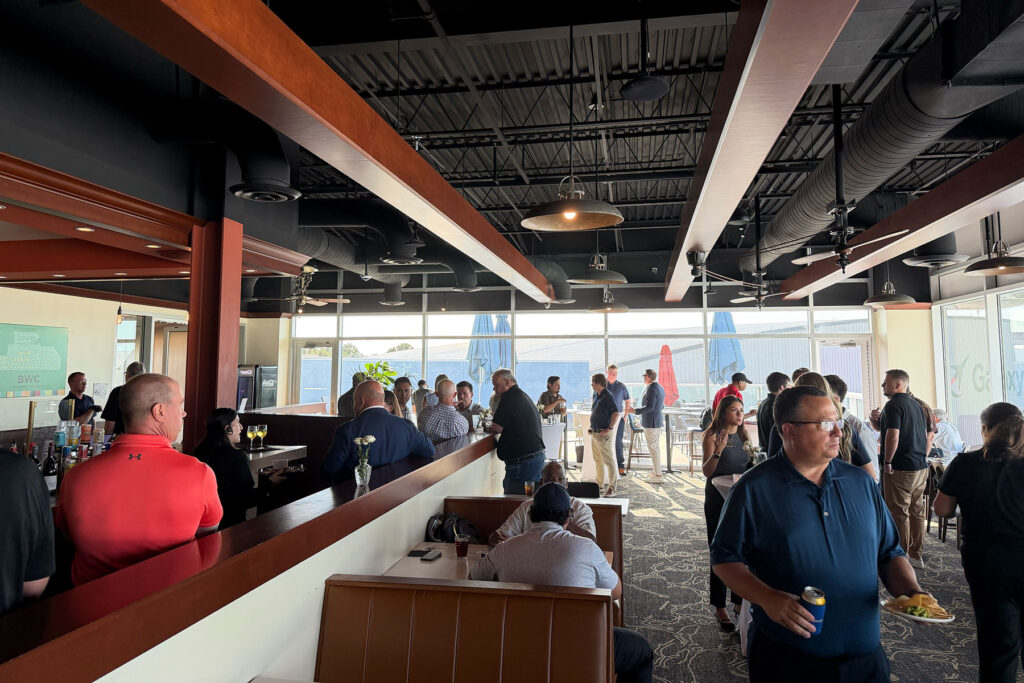
Following the Safety Seminar, attendees continued the conversation during an STXBAA networking mixer at Black Walnut Kitchen & Bar, located on the third floor of Galaxy FBO at CXO. Galaxy FBO was proud to sponsor the mixer and provide an opportunity for pilots, flight departments, aviation professionals and industry partners to connect after an afternoon centered around making our industry safer. Thanks to the generous support of the event sponsors, the seminar and mixer were offered at no charge to attendees, with remaining donations and proceeds benefiting the STXBAA Scholarship Fund and its efforts to support the next generation of aviation professionals.
Galaxy FBO is proud to support STXBAA alongside:
For more information on STXBAA, its mission and upcoming events, visit stxbaa.wildapricot.org
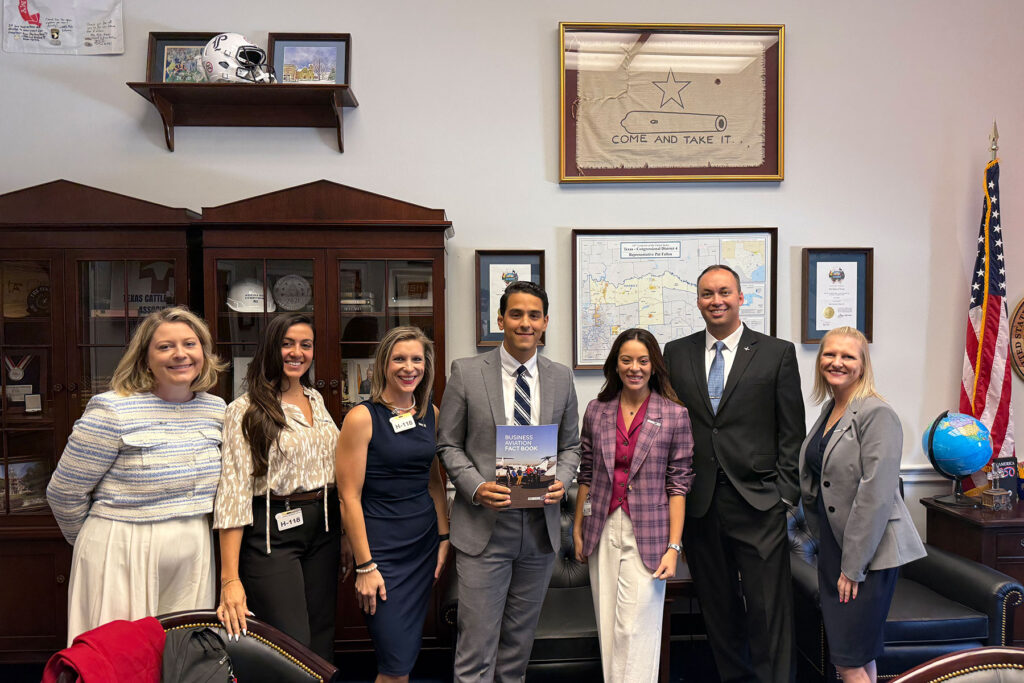
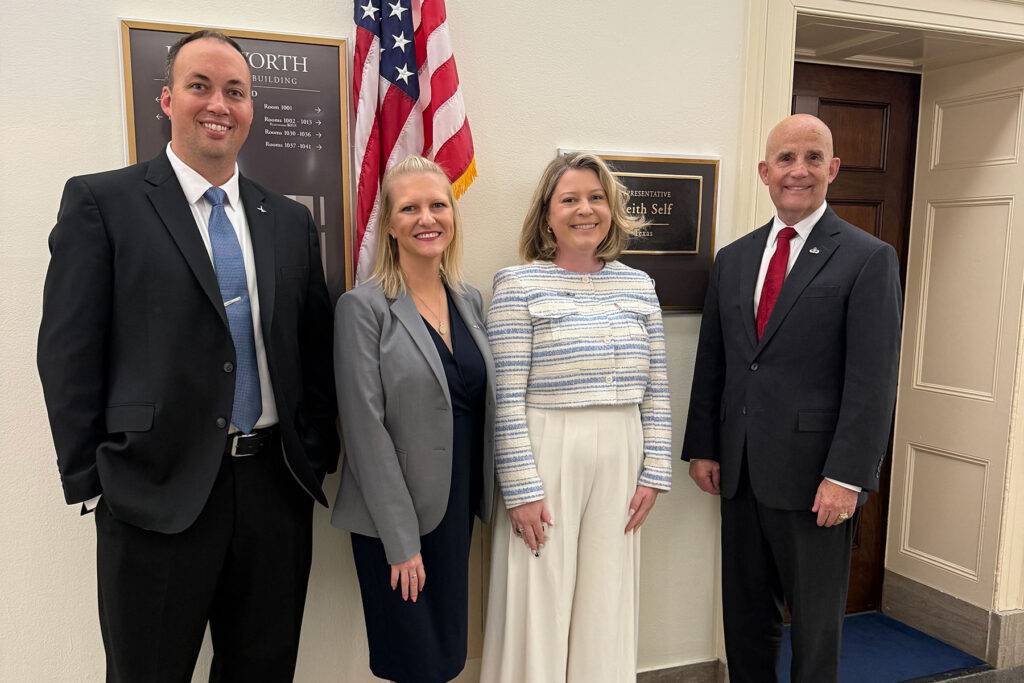
This year, our Addison FBO Experience Manager, Lisa Peterson, represented Galaxy FBO at the National Business Aviation Association (NBAA) 2026 DC Fly-In in Washington, D.C. Joining business aviation professionals from across Texas and the nation, Lisa met with members of Congress and their staff to discuss the issues that will define the future of business aviation in the United States.
During the Fly-In, the Texas delegation met with staff from the offices of Senator Ted Cruz, Senator John Cornyn, Representative Keith Self, Representative Pat Fallon, Representative Julie Johnson, and Representative Brandon Gill. The group also heard from Annie Brody, Director of Coalitions for the Office of the Majority Whip, who provided valuable insight into the legislative process and the importance of industry participation in shaping public policy.
The meeting with Representative Keith Self allowed the group to share why they had traveled to Washington and discuss the critical role business aviation plays throughout Texas and across the nation. The discussion continued with his staff, becoming one of the most engaging meetings of the day, strengthened by the fact that one member of the delegation was a constituent from Representative Self’s district.
The delegation focused on several legislative priorities that are essential to maintaining a safe, efficient, and innovative aviation industry:
- Modernizing the nation’s air traffic control system to improve safety and operational efficiency.
- Supporting aviation workforce development while ensuring the FAA has the resources necessary to maintain the world’s safest aviation system.
- Encouraging continued investment in innovation, including Sustainable Aviation Fuel (SAF) and emerging aviation technologies.
- Recognizing the tremendous economic impact business aviation has on businesses, local communities, emergency response, and humanitarian missions.
These conversations are particularly meaningful for companies like Galaxy FBO because the policies discussed in Washington directly affect our customers, our employees, and the long-term health of the industry we proudly serve.
Business Aviation’s Impact Extends Far Beyond Airports
One message consistently reinforced throughout the Fly-In was the tremendous value business aviation provides to the United States.
Today, business aviation supports more than 1.3 million American jobs and contributes nearly $340 billion annually to the U.S. economy. Beyond its economic impact, business aviation connects communities without commercial airline service, enables companies to reach customers and facilities efficiently, and provides critical support during disaster relief efforts, medical transport missions, and humanitarian operations.
For those of us working in Fixed Base Operations (FBOs), these statistics aren’t just numbers, but they represent the businesses, pilots, passengers, maintenance professionals, and communities we serve every day.
Reflecting on the experience, Lisa identified several key takeaways from her first DC Fly-In.
- Advocacy matters. Meeting directly with legislators and congressional staff demonstrated how valuable firsthand industry perspectives can be. These conversations help policymakers better understand how business aviation supports economic growth, creates jobs, and serves communities across America.
- Relationships drive progress. Whether engaging with congressional offices or networking with aviation professionals from around the country, the relationships built during the Fly-In strengthen the industry’s collective voice and create opportunities for future collaboration.
- Business aviation has an incredible story to tell. From workforce development and safety to innovation and economic impact, the industry contributes far more than many people realize. Sharing that story is essential to ensuring policymakers understand the importance of continued investment in aviation.
At Galaxy FBO, we believe investing in our people means empowering them to become leaders—not only within our company, but throughout the aviation community.
We’re proud to support professional development opportunities like the NBAA DC Fly-In, allowing team members to represent both Galaxy FBO and the broader business aviation industry on Capitol Hill. Through advocacy, collaboration, and continued engagement, we can help ensure that business aviation remains a vital driver of economic growth, innovation, and connectivity for generations to come.
We are grateful that Lisa represented Galaxy FBO with passion, and thank the NBAA for organizing another successful DC Fly-In that brings together aviation professionals committed to advancing the future of our industry.
Whether you’re flying in for a match or hosting international guests, Galaxy FBO’s premier facilities in Houston (HOU), Conroe (CXO), and Addison (ADS) are ready to welcome you with seamless, world-class aviation services.
Houston Match Schedule – NRG / Houston Stadium
June 14, 2026: Germany 🇩🇪 vs Curaçao 🇨🇼June 17, 2026: Portugal 🇵🇹 vs DR CongoJune 20, 2026: Netherlands 🇳🇱 vs SwedenJune 23, 2026: Portugal 🇵🇹 vs Uzbekistan 🇺🇿June 26, 2026: Cabo Verde 🇨🇻 vs Saudi Arabia 🇸🇦June 29, 2026: Brazil vs Japan- July 4, 2026: Canada vs Morocco
Fans flying in for Houston’s matches will find Galaxy FBO at William P. Hobby Airport (HOU) the most convenient gateway — located just minutes from NRG Stadium, with U.S. Customs, executive lounges, and concierge ground transportation available.
For those seeking a more relaxed arrival, Galaxy FBO at Conroe North Houston Regional Airport (CXO) offers spacious hangars, ramp space, and luxury amenities; ideal for avoiding heavy event traffic while staying within easy reach of downtown Houston.
Dallas Match Schedule – AT&T Stadium in Arlington, Texas (Dallas Stadium)
June 14, 2026: Netherlands 🇳🇱 vs Japan 🇯🇵 (Group F)June 17, 2026: England vs Croatia 🇭🇷 (Group L)June 22, 2026: Argentina 🇦🇷 vs Austria 🇦🇹 (Group J)June 25, 2026: Japan 🇯🇵 vs Albania/Poland/Sweden/Ukraine (Group F)June 27, 2026: Algeria vs. Austria- June 30, 2026: Cote d’ivoire – Norway
- July 3, 2026: Australia – Egypt
- July 6, 2026: Match 93
- July 14, 2026: Match 101 – Semi-Final
For travelers attending matches in Dallas or Arlington, Galaxy FBO at Addison Airport (ADS) offers the perfect combination of convenience, privacy, and efficiency; just minutes from major highways and within easy reach of the Dallas Stadium.
With the world watching, Texas is set to become a global hub for business and leisure aviation. Galaxy FBO is ready to ensure that your World Cup experience, from arrival to departure is smooth, comfortable, and memorable.
Why Choose Galaxy FBO
- Premium facilities serving Houston and Dallas Metroplex
- Fast and secure arrivals with U.S. Customs clearance
- Luxury passenger and crew amenities
- Ground transportation coordination (car rentals, chauffeurs, hotel arrangements)
- Large hangar space and ramp capacity for all aircraft types
- Award-winning team, with utmost safety standards (IS-BAH Stage 2 Certified)
- Whether you’re flying fans, athletes, or executives, Galaxy FBO delivers a championship-level experience at every touchpoint.
Plan Ahead for World Cup 2026
Advance planning for aircraft parking, ground handling, and accommodations is strongly recommended.
Join us on July 24, 2026 for the South Texas Business Aviation Association (STXBAA) Aviation Law Seminar with Coats Aviation Law, PC. This day long event is tailored for aircraft owners, flight departments, operators, and business aviation service providers. Attendees will receive actionable legal insights on the most pressing topics impacting aviation professionals.
Seminar Highlights:
- Aircraft tax strategies and state/federal compliance
- FAA regulations, including Part 91 and Part 135 operations
- Aircraft transactions, leases, and ownership structures
- Insurance best practices and risk mitigation
- And more—delivered by experienced aviation law professionals
Event Details
- When: Friday, July 24, 2026
- Where: Galaxy FBO at the Conroe North Houston Regional Airport
Registration
- Please visit STXBAA’s website at stxbaa.org
Galaxy FBO was once again named the #1 Small FBO Chain (3–10 locations)—marking its fourth consecutive year earning this top distinction in 2023, 2024, 2025 and 2026. With an exceptional chain-wide score of 9.71 (up from 9.68 a year ago), Galaxy FBO continues to set the standard for excellence across its Texas based locations.
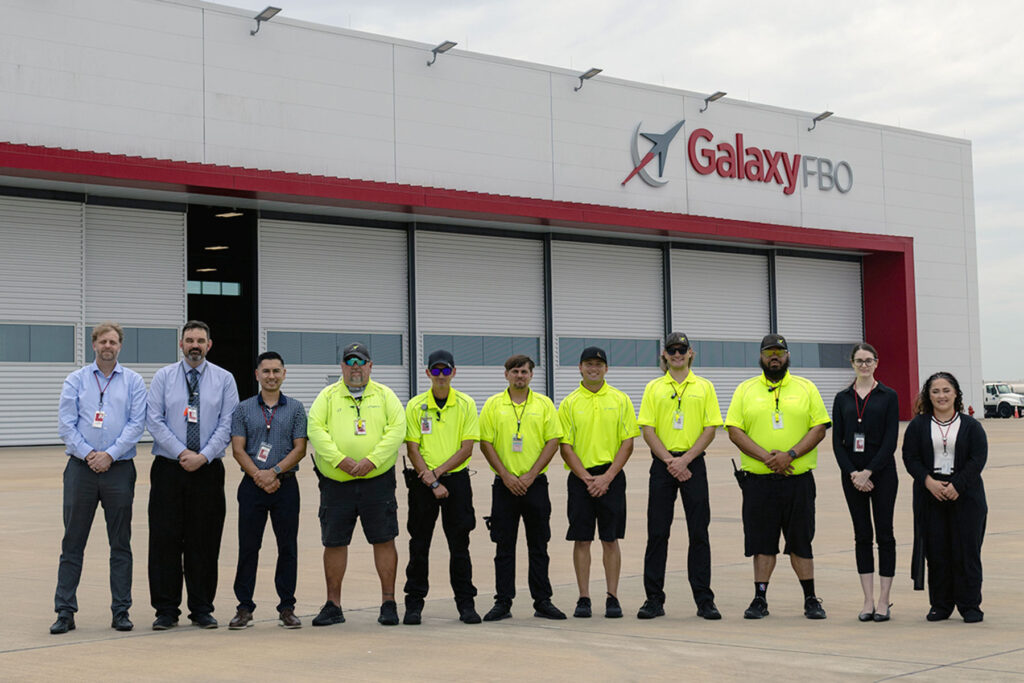
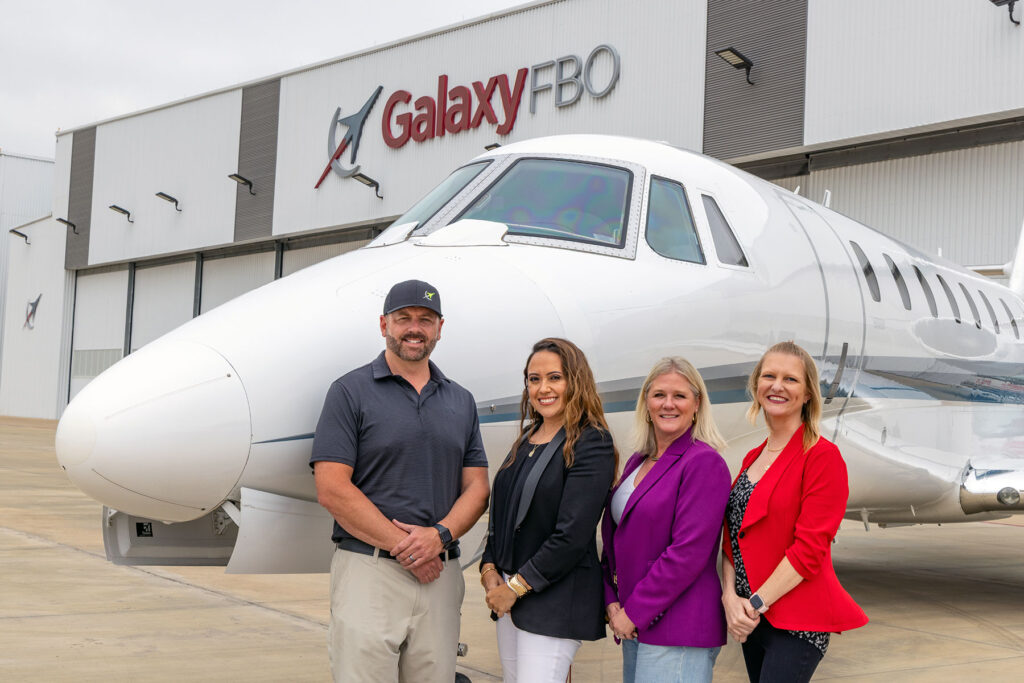
The Professional Pilot PRASE (Preferences Regarding Aviation Services and Equipment) Survey, now in its 52nd year, is one of the most trusted benchmarks in the business aviation industry. In 2026, a total of 6861 individual evaluations were submitted by qualified operators, scoring FBOs on the core elements that matter most to pilots, dispatchers, and flight departments.
Galaxy FBO’s continued presence at the top of the rankings is a testament to its relentless focus on customer service, operational excellence, and facility innovation. Whether you’re flying to Greater Houston or Dallas Metroplex – Galaxy FBO provides a seamless and elevated ground experience.
MAC Air Group, headquartered at Portland International Jetport (PWM) in Portland, Maine, has operated as a cornerstone of general aviation in the Northeast since 1959; building a reputation for safety, service, and operational excellence across six decades and three generations of the Caruso family.
This acquisition reflects Black Forest Ventures Aviation’s deliberate, disciplined approach to portfolio growth: identifying operators who have already earned the trust of their markets, and investing in their continued success. Both Galaxy FBO and MAC Air’s FBO operation share a commitment to premium service, operational reliability, and long-term relationships within the business aviation community. Each company has built its reputation around a hospitality-first culture backed by strong operational expertise, creating a seamless experience for aircraft owners, crews, and passengers alike. Strategically, the combination creates valuable geographic synergy between Galaxy’s Texas footprint and MAC Air’s presence in the Northeast, giving customers access to trusted FBO support across key domestic and transatlantic travel corridors. Together, the two operations strengthen Black Forest Ventures’ vertically integrated aviation platform that share similar values, safety standards, and family-oriented cultures.
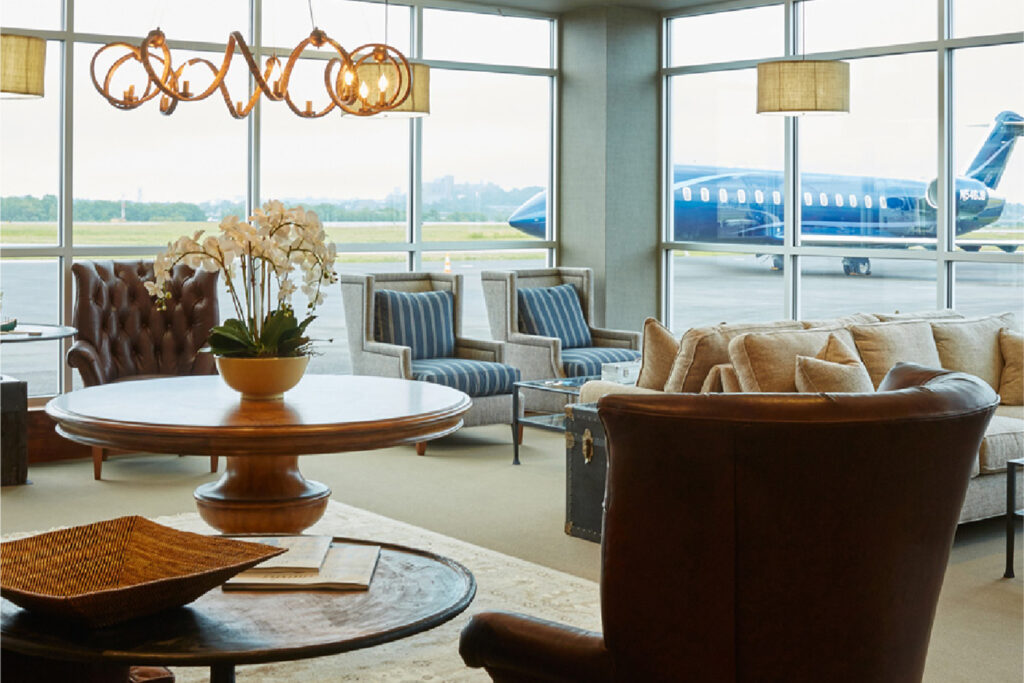
A Purpose-Built Campus at Portland International Jetport
MAC Air Group’s presence at PWM is anchored by a modern, purpose-built facility developed from the ground up in 2016. The campus spans approximately 28,800 square feet of FBO terminal and hangar space, supported by a 12,960 square foot operations center; creating a seamless environment for passenger services and flight operations alike. A dedicated 12,000 square foot maintenance hangar and parts storage facility rounds out the footprint, giving MAC Air the capacity to support continued growth across its operations.
For more information, please visit macairgroup.com